
Artwork & Graphic Design by Gwen Cleveland, David L. Hubbard
Revelatory Evolution...Evolving Revelation
Light and Life
The Urantia Book
A Course in Miracles
Pathwork Foundation
Celestial Teachers
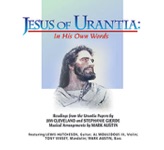
FREE mp3 download
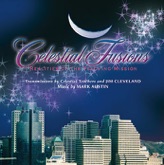
FREE mp3 download
NEW at Divine Love Sanctuary
God created Evolution — a master plan for his children in time and space worlds. Humans and their societies have evolved in amazing ways over the generations.
Evolution has been assisted periodically with spiritual revelations that can’t be learned on our own. Most are personal. Today, three of them are shaping up as a unified curriculum of wisdom, a foundation for future human growth.
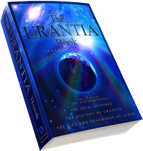
The Urantia Book relates the nature of God, our planetary history, and the cosmology of the universe. It explains our place as an ascending mortal and provides a detailed history of the incarnation of Jesus.
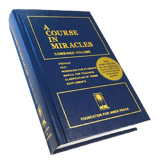
A Course in Miracles teaches a transformation to spiritual thinking to solve our human issues, with the revelation that we are created in spirit and are having a material experience.
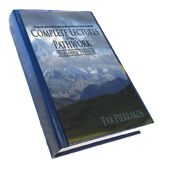
The Pathwork Guide lecture collection, 258 spirit-driven presentations by Eva Perriokas, help us access our higher consciousness and work cooperatively with other souls on their paths.
This trio of Epochal Revelations is being more strongly supplemented in our current times of critical, apocalyptic decisions for humankind. These expanded connections enhance our abilities to connect with spiritual teachers and learn true values to accelerate our evolution.
The Teaching Mission and Magisterial Mission presents a database with thousands of continuing celestial transmissions over the past quarter century. These conversational sessions with Urantia Book students represent the mission of Christ Michael to redeem the planet by raising spiritual consciousness and with interventions that respect our free wills.
Spiritual Friends and Sources on this site incorporates complementary paths of soul growth, including Humanity’s Team, Divine Love Sanctuary, Correcting Time and Institute for Christ Consciousness.
Our mission at Light and Life includes creation of a search database for the comparative study of key spiritual concepts in these Revelations, as well as the new 2021-22 celestial messages. This is truly an exploration since we don’t know what we will find.
Here is a link to our Search Central page.
NEW! A COLLECTION of transcripts from Jim Cleveland's teachers over the years, 1993-2011, mostly in Cincinnati.
Includes Tarkas, Bakim, Elisha, Machiventa and Mantoube Melchizedek and Christ Michael.
URANTIA ARTISANS

Fellowship publications exist to deepen appreciation of the teachings ofThe Urantia Book, to celebrate unique creativity, and to connect the community to the The Urantia Book Fellowship's vision of promoting spiritual transformation by sharing a revelation of living truth.
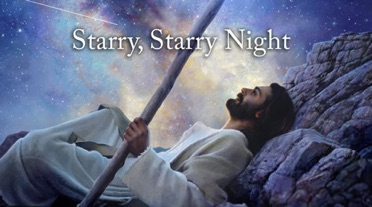
The Urantia Book — For Jesus — Starry Night by Gary Tonge
An adaptation of Don McLean's "Vincent" dedicated to Jesus and the recent publication of his untold story.
The Jesus Metauniverse
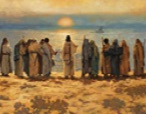

Author Rick Lyon
Rick has been a passionate student of the Urantia Book since he discovered the book in 1978. Find out more about Rick and his books in Friends & Sources

Author Framy Mâs
The Universal Siblinghood. Our friend and fellow Lightworker Framy Mâs, who is educated and experienced in
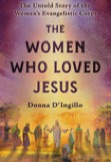
NEW book from Donna D'Ingillo
THE WOMEN WHO LOVED JESUS
The Untold Story of the Women’s Evangelistic Corps
Jesus’ opened many hearts to the nature of divine love. His life-changing teachings and healings revealed the Creator’s compassion, understanding, and forgiveness which inspired human nature to become more loving and service-motivated. His public ministry is brought to new light through the tales of the twelve women he commissioned to serve as his Apostles. Each woman offers her individual story of how Jesus opened her heart through his radiant personality to catalyze her true human worth and dignity. Together under Jesus’ direction, they formed an environment for healing in many ways for those who came to hear his Gospel message.
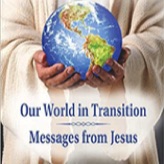
several spiritual cultures, publishes his inspired narrative about our world community of humans in transition. Visit him in Friends & Sources.
New in the Urantia Book Suite: Revelations and Prayers — a Guide for Jesusonian Service Through Worship by Bruce Jackson offers 37 supplementary services on single topics from the Urantia Book. Included are human teachings, Biblical references, and prayers to encourage worship. This more flexible guide is designed to be an ongoing resource for a creative worship development.
URANTIA BOOK history and facts, an independent website managed by Halbert Katzen, has a treasure trove of thoughtful and illuminating material about the Revelation.
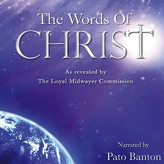
Blessings and love to all my Fans, Friends & Spiritual Family from PATO BANTON:
"The Words Of Christ, a 7 CD Box Set is now available as a FREE DOWNLOAD for everyone around the World! I feel this is the greatest work I have ever produced and the greatest Gift I could ever Give! Please feel free to download these 50 amazing lessons from the Sovereign Ruler of this Local Universe. Any donations will go towards our Spiritual Ministry. Please Share & Enjoy
The Words Of Christ is a series of inspirational lessons from Jesus Christ as revealed in The Urantia Book which is the 5th Epochal Revelation to humanity. It took Pato 7 years to complete this mission that he initially thought would be only 14 tracks on one cd. The messages contained in these lessons have been a deep source of inspiration to many people all over the world including Pato himself, especially on long trips! We hope and pray that these Uplifting Lessons will continue to inspire you too. One Love Always ~ Pato Banton aka BrotherFriend
https://patobantonofficial.bandcamp.com/album/the-words-of-christ-7cd-box-set
THE WORDS OF CHRIST
from PANTO BANTON
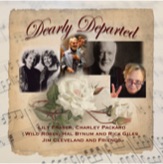
NEW OFFERING for "DEARLY DEPARTED"
Five Spiritual Friends and their Music Legacy
Over years of attending Urantia Book and Teaching Mission conferences, I've heard some very gifted singers and songwriters. Some of them have passed on, leaving a legacy of great songs and performances. This album is a tribute intended as a Legacy.
Click on the graphic for more information.
NEW OFFERING on AMAZON!
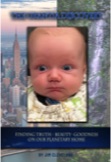
The URANTIA DISCOVERY BOOK
The URANTIS DISCOVERY: Finding Truth, Beauty and Goodness on our Home Planet; Introducing the Wisdom of the Urantia Book, a large collection of color photographs and nuggets of spiritual insight.
Click on the graphic for more information.
The purpose of The Urantia Book Science and History channel is to provide visual conception and information based on the scientific and historical content of The Urantia Book. To compare and contrast those concepts of The Urantia Book with observations and the multifarious discoveries found in the multitudes of our scientific and historical fields.
NEW OFFERING on AMAZON!
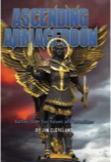
ASCENDING ARMAGEDDON
Battles Over Our Values and Intentions
Apocalypse has unveiled all of a naked world for us to see. True and false rhetoric has engulfed us in a global tsunami that challenges our minds, our values and intentions.
Armageddon battles react and rage across the planet. Will the forces of Goodness win on these fronts? What will be our personal part? Victims or Champions? Faith-driven or in faithless despair? Will we battle corruption or be part of it?
Click on the graphic for more information.
A SPIRITUAL BILL OF RIGHTS FOR HUMANITY by Theresa Marks
Humanity is at a critical juncture.
While scientific and technological advances may solve material problems, they can never heal the ultimate source of humanity’s woes–the human spirit itself–which has been crippled throughout history by fear, oppression and feelings of worthlessness. These are spiritual problems that require spiritual answers.
“A Spiritual Bill of Rights for Humanity” was written by Theresa Marks after her many years inside the religion of her birth and a twenty-year journey exploring many diverse spiritual traditions. The Seven Fundamental Spiritual Rights that the document outlines, along with a comprehensive section on putting these rights into practice, provide essential principles to spiritually empower individuals and unleash humanity’s vast potential to bring about worldwide spiritual renewal and unity.